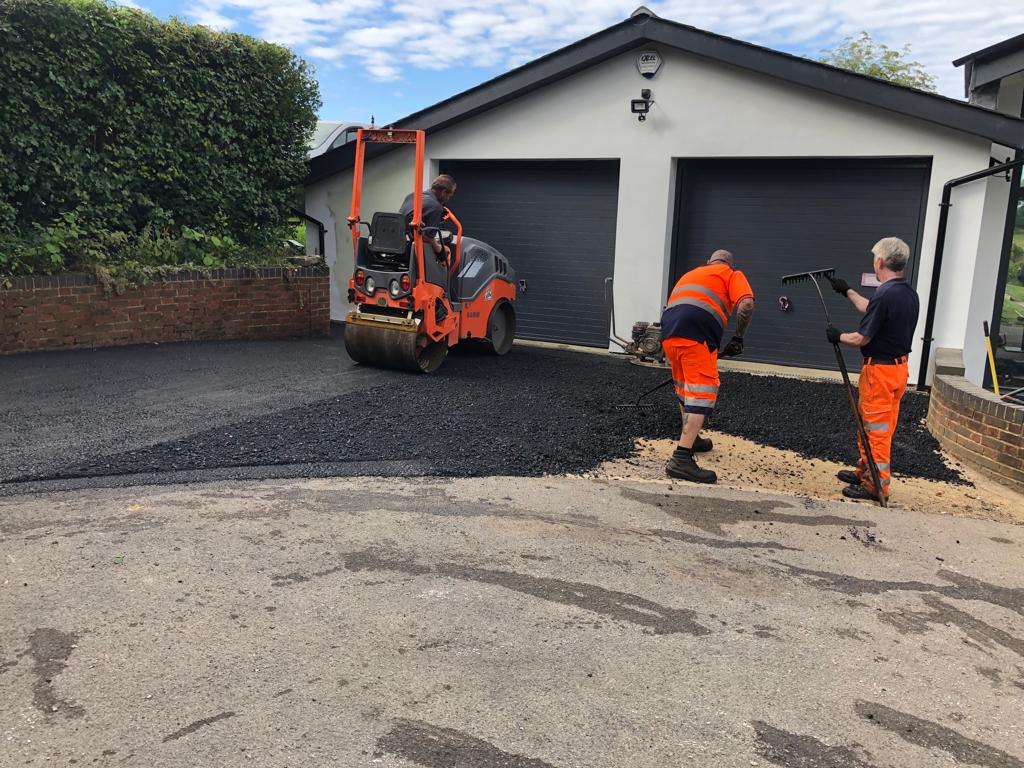
Asphalt is one of the most widely used materials for constructing roads, driveways, car parks and access areas. Its ability to provide a smooth, durable and practical surface makes it suitable for a wide range of residential and commercial applications. However, the reasons behind its popularity go beyond appearance.
A properly constructed asphalt pavement can accommodate regular vehicle movements, provide dependable access and withstand everyday traffic demands. Its flexibility, repairability and suitability for different pavement designs make it a practical option for both new construction and resurfacing projects.
For property owners and businesses in Canberra, ACT, understanding the advantages of asphalt can help when deciding how to construct a new driveway, improve an access road or restore an ageing pavement.
What Makes Asphalt Suitable for Roads and Driveways?
Asphalt is a pavement material made from aggregates combined with a bituminous binder. The mixture is placed over a prepared foundation and compacted to create a firm, continuous surface.
Unlike loose gravel or other unsealed materials, asphalt forms a bound wearing layer that can withstand regular vehicle movements when properly designed and installed.
Its performance depends on several factors, including the quality of the supporting pavement, the asphalt mixture, installation methods, drainage and expected traffic loads.
When these elements are considered together, asphalt can provide a reliable surface for roads and driveways of different sizes and purposes.
1. Asphalt Provides a Smooth Driving Surface
One of the main reasons asphalt is commonly selected for roads and driveways is its ability to provide a smooth, consistent finish.
An even asphalt surface makes everyday vehicle movements more comfortable and reduces the irregularities associated with worn gravel, potholes and uneven unsealed surfaces.
For residential driveways, this can improve access between the property entrance, parking area and garage.
For roads and commercial access areas, a consistent surface helps vehicles travel along established routes without encountering unnecessary bumps or loose material.
However, achieving a smooth finish requires more than simply placing asphalt. The supporting pavement must be correctly graded and prepared to establish suitable levels before installation.
2. Asphalt Can Withstand Regular Vehicle Traffic
Roads and driveways are subjected to repeated vehicle loading.
Each passing vehicle transfers weight through the surface into the supporting pavement layers. Asphalt is designed to distribute these loads when the pavement structure is appropriate for the traffic it carries.
This makes it suitable for residential driveways, private roads, commercial entrances and many other trafficable areas.
However, different applications require different pavement designs.
A residential driveway primarily used by passenger vehicles will generally experience different loading conditions from a commercial access road accommodating regular heavy vehicles.
Professional asphalt construction considers the expected traffic before determining the appropriate pavement thickness, supporting materials and installation method.
This helps ensure the finished surface is suited to its intended use.
3. Asphalt Offers Flexibility Under Traffic Loads
Asphalt is commonly described as a flexible pavement material because it can accommodate limited movement and distribute loads through the pavement structure.
This characteristic is useful for roads and driveways that experience repeated vehicle movements.
However, flexibility should not be confused with an ability to withstand unlimited movement.
If the underlying ground becomes unstable or the pavement base is inadequate, excessive movement can still cause cracking, rutting and other defects.
The strength of the supporting layers remains essential.
A properly designed asphalt pavement combines the characteristics of the asphalt mixture with a stable foundation to provide dependable performance.
4. Asphalt Is Suitable for Different Property Types
Another reason asphalt is widely used is its versatility.
It can be installed across a range of residential, commercial and suitable industrial applications.
Common uses include:
- Residential driveways
- Private access roads
- Commercial driveways and entrances
- Car parks
- Internal roads
- Shared access areas
- Suitable hardstands and service areas
- Road resurfacing projects
Each application has different requirements.
A driveway may need to accommodate occasional turning and parking movements, while a commercial car park may experience frequent braking, acceleration and manoeuvring.
The pavement design should reflect these differences rather than relying on the same construction method for every project.
For properties in Canberra, ACT, asphalt can provide a practical surfacing solution when site conditions and traffic requirements are properly assessed.
5. Asphalt Can Be Used for New Construction and Resurfacing
Asphalt is suitable for both newly constructed pavements and the renewal of existing surfaces.
For new roads and driveways, the work generally begins with preparing the ground and constructing suitable supporting pavement layers.
Once the foundation is stable and correctly graded, asphalt can be installed to provide the finished wearing surface.
For existing pavements, resurfacing may be appropriate when the upper asphalt layer has deteriorated but the underlying structure remains sound.
Resurfacing can restore the surface without requiring complete reconstruction in every situation.
However, significant base failure, deep rutting or widespread structural cracking must be addressed before a new asphalt layer is installed.
This distinction is important because resurfacing is not a substitute for repairing an unstable foundation.
6. Asphalt Can Be Repaired and Maintained
All road surfaces experience wear over time, and asphalt is no exception.
Regular traffic, moisture, temperature changes and ageing can contribute to cracks, potholes and surface deterioration.
One advantage of asphalt is that many defects can be addressed through localised repairs when the surrounding pavement remains in suitable condition.
For example, a damaged section may be removed and reinstated without reconstructing the entire driveway or road.
Where deterioration is more widespread but the supporting pavement remains stable, resurfacing may be an appropriate option.
The correct treatment depends on the extent and cause of the damage.
Prompt attention to developing defects can help prevent moisture entering the pavement and reduce the likelihood of deterioration spreading.
7. Asphalt Creates a Neat and Consistent Appearance
The appearance of a driveway or access road can influence the overall presentation of a property.
Asphalt provides a relatively uniform finish that can create a clear distinction between trafficable areas and surrounding surfaces.
For residential properties, a professionally installed asphalt driveway can improve the appearance of the entrance and provide a defined route for vehicle access.
For commercial properties, asphalt can create a consistent surface across parking areas, entrances and internal roads.
However, appearance should not be the only consideration.
A surface that looks smooth immediately after installation may still develop problems if the underlying pavement has not been adequately prepared.
Professional installation focuses on both the finished appearance and the structural performance of the pavement.
Why Is Asphalt Popular for Residential Driveways?
Residential driveways need to provide dependable access for everyday vehicle movements.
Asphalt is suitable for many homes because it creates a firm, continuous surface that is practical for regular driving and parking.
Compared with an unsealed driveway, a properly constructed asphalt surface is less susceptible to loose aggregate being displaced by tyres.
It can also reduce the formation of surface corrugations and wheel-track ruts associated with some unsealed materials.
However, the driveway must have an appropriate foundation and effective drainage.
If water regularly collects on the surface or the supporting material becomes unstable, cracking and deformation may eventually develop.
For homeowners in Canberra, ACT, professional assessment helps determine whether asphalt is suitable for the driveway’s layout, ground conditions and expected vehicle use.
Why Is Asphalt Commonly Used for Roads?
Roads experience repeated traffic loading over a larger area and often require more detailed pavement design than residential driveways.
Asphalt is commonly used because it provides a continuous wearing surface that can accommodate regular vehicle movements when supported by a suitable pavement structure.
Its suitability for different road layouts and traffic conditions makes it a practical construction material.
Asphalt can also be used to renew existing roads where the supporting pavement remains serviceable.
However, road construction must consider factors such as vehicle loads, drainage, pavement thickness and the condition of the underlying ground.
Where heavier vehicles regularly use the road, additional structural capacity may be required.
Professional preparation and installation help ensure the asphalt pavement is appropriate for its intended traffic demands.
How Does Asphalt Perform in Changing Weather Conditions?
Roads and driveways are exposed to changing temperatures, rainfall and other environmental conditions.
Asphalt can perform effectively in these conditions when the pavement is properly designed, installed and maintained.
However, temperature changes can cause pavement materials to expand and contract, while moisture entering through cracks can weaken the supporting layers.
In Canberra, ACT, seasonal temperature variations make appropriate material selection, pavement construction and maintenance important considerations.
A well-prepared foundation and effective drainage help reduce the risk of premature deterioration.
Existing cracks should also be monitored because water entering the pavement can contribute to further damage.
Asphalt is durable, but its performance depends on the complete pavement structure rather than the wearing surface alone.
Why Is Drainage Essential for Asphalt Roads and Driveways?
Drainage is one of the most important factors influencing pavement performance.
Although asphalt forms a bound surface, water can enter through cracks, joints and damaged edges.
If moisture reaches the supporting layers, it may reduce their strength and contribute to movement under traffic.
Poor surface levels can also allow rainfall to collect in depressions, increasing the likelihood of water-related deterioration.
Professional asphalt construction should establish suitable falls to direct water away from the trafficable surface.
This may involve grading the supporting pavement, correcting low points and ensuring the finished surface connects appropriately with existing drainage arrangements.
Effective drainage helps protect the pavement and supports its long-term serviceability.
How Important Is Ground Preparation Before Asphalt Installation?
The durability of asphalt depends heavily on the strength of the foundation beneath it.
Even a high-quality asphalt mixture can deteriorate prematurely when installed over weak or poorly prepared ground.
Before construction, the site should be assessed for unsuitable materials, unstable areas, drainage problems and existing pavement defects.
Preparation may involve excavation, grading, installing suitable road base and compacting the supporting layers.
Correct compaction helps establish the density and stability needed to support regular traffic.
For roads and driveways, this preparation is essential because the finished asphalt relies on the underlying pavement to distribute vehicle loads.
Professional ground preparation helps reduce the likelihood of settlement, rutting and premature cracking.
Is Asphalt Better Than an Unsealed Surface?
Asphalt and unsealed surfaces serve different purposes, and the most suitable option depends on how the area will be used.
An unsealed surface may be appropriate for certain access roads and low-traffic areas, provided it is properly constructed and maintained.
However, unsealed roads and driveways can experience loose aggregate movement, corrugations, rutting and surface erosion.
Asphalt provides a bound wearing layer that can offer a smoother and more consistent surface for regular vehicle use.
It also reduces the need for routine reshaping associated with some unsealed surfaces.
However, asphalt still requires maintenance, and its suitability depends on adequate ground preparation and drainage.
The decision should be based on traffic demands, site conditions and the intended use of the pavement.
When Should an Existing Asphalt Surface Be Resurfaced?
Over time, asphalt may develop signs of ageing and surface deterioration.
Common indications that resurfacing may be worth considering include:
- Widespread surface wear
- Loss of surface texture or aggregate
- Localised cracking
- Minor surface irregularities
- Repeated repairs across an otherwise stable pavement
- Deterioration of the upper wearing layer
Before resurfacing, the pavement should be assessed to determine whether the supporting structure remains suitable.
If cracking, rutting or potholes are caused by deeper structural problems, those issues must be corrected before a new asphalt layer is installed.
Where the existing pavement remains stable, resurfacing can provide a practical way to restore its condition and extend its useful service life.
Why Professional Asphalt Installation Makes a Difference
The performance of an asphalt road or driveway depends on several construction stages being completed correctly.
Experienced contractors consider the intended use of the surface, expected traffic, ground conditions and drainage before selecting an appropriate construction method.
Professional installation involves preparing the supporting pavement, establishing suitable levels, selecting the correct asphalt material and achieving appropriate compaction.
Attention to edges, joints and transitions is also important because these areas can become vulnerable to deterioration if poorly constructed.
For property owners and businesses in Canberra, ACT, professional workmanship helps ensure the finished surface is not only smooth and visually consistent but also suitable for the demands placed on it.
Conclusion
Asphalt is commonly used for roads and driveways because it provides a smooth, durable and versatile surface that can accommodate a wide range of vehicle movements.
Its suitability for residential driveways, access roads, commercial areas and resurfacing projects makes it a practical choice for many properties.
However, asphalt performance depends on more than the material itself. A stable foundation, appropriate pavement thickness, effective drainage, suitable material selection and correct compaction are all essential for achieving a dependable result.
Whether constructing a new driveway or restoring an existing road, professional assessment and preparation help ensure the pavement is designed for its intended use.
Canberra Road Tek provides professional asphalt and bitumen surfacing, resurfacing and pavement preparation services in Canberra, ACT. If you are planning a new driveway, access road or asphalt resurfacing project, contact our team to discuss your requirements and arrange an assessment of the site.
Call us on: 02 5135 3012
Click here to find out more about Canberra Road Tek
Click here to complete our contact form and see how we can help with your asphalt and bitumen surfacing needs.