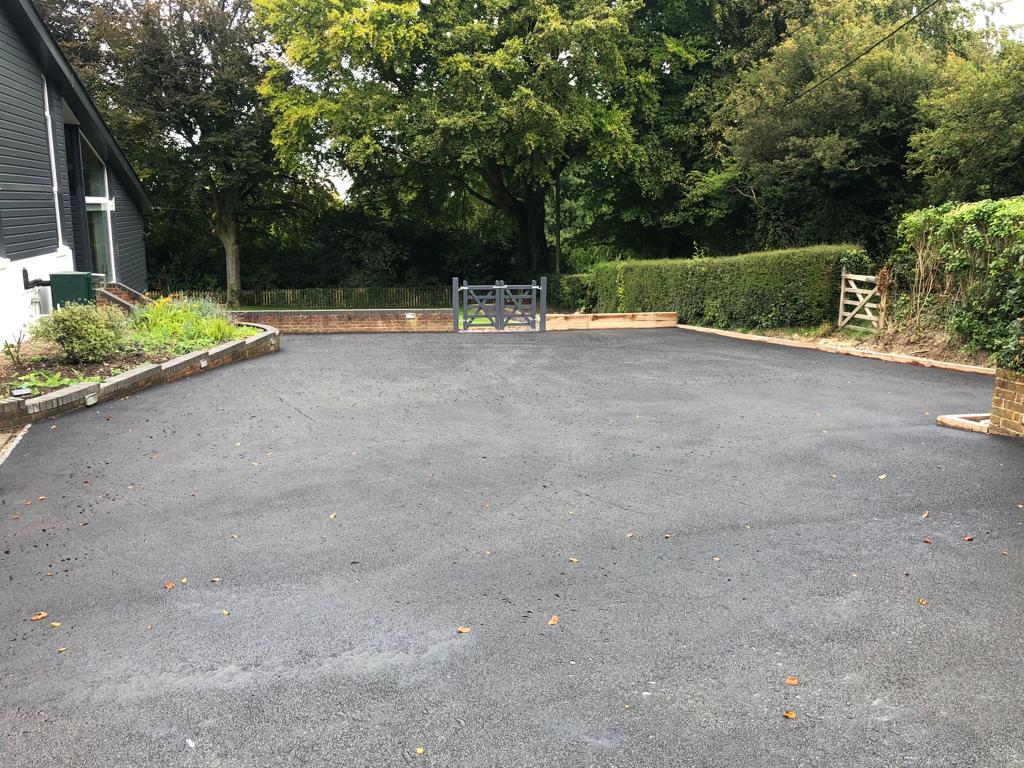
A smooth asphalt surface starts well before the asphalt itself is laid. If the ground or existing pavement underneath contains incorrect levels, depressions, high points or poorly formed falls, simply covering it with asphalt is unlikely to provide the best result. The underlying profile needs to be properly prepared first.
Correct levels are important for more than appearance. They influence how vehicles move across the pavement, how evenly the surface is supported and, importantly, where rainfall travels. Poor levels can create areas of standing water, uneven pavement thickness and sections that become vulnerable to premature deterioration.
For property owners and businesses in Canberra, ACT, understanding how professional contractors correct levels helps explain why preparation is such an important part of asphalt construction. At Canberra Road Tek, we assess the existing ground and pavement carefully before surfacing so that grading, drainage and base preparation can be addressed before asphalt is installed.
Why Do Levels Matter Before Asphalt Is Laid?
Asphalt follows the general profile of the pavement underneath it. Although some minor irregularities can be corrected during preparation and surfacing, asphalt should not be relied upon to compensate for a poorly shaped foundation.
The prepared pavement needs to establish appropriate levels before the finished surface is installed.
Correct preparation helps provide:
- Consistent pavement support
- Suitable surface falls
- Effective drainage
- Smoother vehicle movements
- Appropriate transitions between surfaces
- Stable pavement edges
- A suitable foundation for asphalt compaction
Getting these fundamentals right can help the finished pavement perform as intended.
Contractors First Assess the Existing Levels
Before correcting the pavement, contractors need to understand what is wrong with the existing profile.
The site is inspected to identify high points, depressions, uneven transitions and areas where water is likely to collect.
Existing features also need consideration. These can include entrances, pavement edges, adjoining surfaces and other fixed levels that influence how the finished asphalt needs to sit.
Water Can Reveal Problems With Existing Levels
One of the clearest indicators of poor levels is the way rainfall behaves across a site.
Standing water can identify depressions, while erosion patterns may reveal where runoff is being concentrated.
Other warning signs include:
- Water collecting in wheel paths
- Puddles remaining in isolated sections
- Potholes repeatedly developing in low areas
- Water travelling along rather than across the pavement
- Soft areas after rainfall
- Erosion around pavement edges
These conditions can help contractors understand how the existing pavement profile is affecting drainage.
Existing High Points May Need to Be Reduced
Not every level problem involves a depression. High areas can also interfere with the finished pavement profile.
A raised section can redirect water towards an unsuitable location or create an abrupt transition for vehicles.
Depending on the existing construction, contractors may need to remove or reduce material in these areas before rebuilding the required profile.
Simply increasing the level everywhere around a high point is not always appropriate because this can alter surrounding falls and transitions.
The complete area needs to be considered rather than treating each irregularity separately.
Low Areas Need More Than a Thin Covering of Asphalt
Depressions are another common issue.
It may seem straightforward to fill a low area with additional asphalt, but contractors first need to establish why the depression developed.
If the supporting pavement underneath has settled or become unstable, adding material to the surface may improve the level without correcting the underlying weakness.
Contractors Need to Determine Whether the Base Is Stable
Where a depression is caused primarily by incorrect grading but the pavement underneath remains stable, suitable material can be used during preparation to restore the required profile.
Where settlement has occurred because the base has weakened, the affected section may require deeper attention.
Unstable material may need to be removed and replaced before the level is rebuilt.
This distinction is important because a correctly shaped surface still needs dependable support underneath it.
Grading Establishes the Required Pavement Profile
Grading is one of the main processes used to correct levels before asphalt surfacing.
Rather than simply making the ground look flat, grading creates a controlled pavement profile.
The aim is to shape the prepared surface so that it supports vehicle movements while directing rainfall appropriately.
Depending on the site, grading can involve:
- Removing high areas
- Filling low sections
- Redistributing suitable pavement material
- Establishing consistent falls
- Correcting uneven transitions
- Preparing edges
- Creating the required pavement shape
Once the correct profile has been established, the prepared material needs to be compacted.
Why Shouldn’t an Asphalt Surface Be Completely Flat?
A surface can appear flat while actually containing carefully controlled falls.
This is important because a completely level pavement can allow rainfall to remain on the surface.
Contractors generally need to establish a profile that encourages water to move towards an appropriate drainage path rather than collecting in traffic areas.
Small Level Changes Can Make a Significant Difference
Drainage does not always require dramatic slopes.
Carefully controlled differences in pavement height can influence where water travels across a large area.
This is why grading needs to be planned rather than estimated simply by looking at the ground. The required levels should work across the entire pavement and connect appropriately with surrounding surfaces.
Road Base Can Be Used to Build the Correct Levels
Where additional pavement depth is required, suitable base material can be placed and shaped to establish the required profile.
The base provides structural support underneath the asphalt, so its preparation is critical.
Material needs to be distributed appropriately rather than simply tipped into low areas and covered.
The objective is to create a consistent pavement structure with the correct shape and support.
Compaction Helps Keep Corrected Levels Stable
Correcting the levels is only part of the preparation process.
Material that has been placed or redistributed needs adequate compaction. Without this, the pavement can settle after vehicles begin using the surface.
Settlement can recreate depressions that were supposedly corrected during construction.
Professional compaction helps create a dense and stable foundation before asphalt is installed.
This is particularly important in:
- Filled low sections
- Reconstructed areas
- Pavement edges
- Entrances
- Regular wheel paths
- Areas carrying heavier vehicles
Each prepared layer should contribute to the stability of the finished pavement.
Existing Potholes Need Proper Preparation
Where an existing surface is being prepared for asphalt resurfacing, potholes can interfere with pavement levels.
Simply filling the visible opening immediately before surfacing may not be sufficient if the material underneath is unstable.
The damaged area should be assessed to determine the extent of deterioration.
Loose or failed material may need to be removed before the section is rebuilt and compacted to an appropriate level.
Once localised failures have been corrected, the wider pavement can be prepared more consistently.
Rutting Can Affect the Required Preparation
Wheel ruts are depressions that form along frequently travelled traffic paths.
Minor surface irregularities may be manageable during preparation, but substantial rutting can indicate pavement deformation.
If the pavement underneath has moved, contractors need to determine why before attempting to restore the level.
Potential causes can include:
- Weak pavement support
- Repeated heavy loading
- Inadequate compaction
- Water penetration
- Base movement
Where deeper instability exists, affected sections may need repair before the wider surface is graded and prepared.
Transitions Between Surfaces Require Careful Planning
The new asphalt often needs to connect with existing surfaces.
These transitions should be considered during the level-setting stage rather than left until the asphalt is being laid.
Poor transitions can create abrupt changes in height or interfere with drainage.
Entrances are particularly important because vehicles regularly cross these areas. The prepared pavement needs to provide a practical transition while still maintaining appropriate surface falls.
Edges Also Influence Pavement Levels
Asphalt edges should not be overlooked when preparing the pavement.
If surrounding ground is significantly lower or has eroded, the pavement edge can lose support. Conversely, poorly planned surrounding levels can direct water towards the asphalt.
Professional preparation considers how the finished surface relates to adjoining ground so that pavement levels work as a complete system.
Existing Asphalt May Need Different Preparation From a New Surface
Correcting levels for new asphalt construction is not necessarily the same as preparing an existing pavement for resurfacing.
With a new surface, contractors can establish the required pavement profile during ground and base preparation.
An existing pavement presents different challenges because some sections may already be at suitable levels while others contain rutting, patches, depressions or previous repairs.
A condition-based approach may involve retaining stable sections while correcting specific areas before resurfacing.
Why Not Just Use More Asphalt to Correct Everything?
Asphalt can be used as part of creating the finished pavement profile, but it should not be treated as a substitute for proper base preparation.
Where significant level differences exist, building the correct foundation first provides more consistent structural support.
If large depressions are simply covered without understanding why they formed, existing pavement weaknesses can remain underneath.
The goal is therefore not merely to create a surface that looks level when construction is finished. It is to create a pavement profile that remains properly supported during regular use.
Correct Levels Are Particularly Important on Larger Areas
As the size of a pavement increases, controlling surface levels becomes increasingly important.
Driveways, access roads, hardstands and other larger asphalt areas can contain multiple traffic routes and drainage paths.
A low section in the wrong location can collect a considerable amount of rainfall, while an incorrectly formed high point can redirect water across the pavement.
Professional grading considers how these areas work together rather than treating individual sections in isolation.
Preparation Should Reflect How the Surface Will Be Used
Traffic demands also influence pavement preparation.
Areas used for frequent turning, heavier vehicles or repeated access require dependable support underneath the asphalt.
Correcting levels without considering traffic can leave vulnerable sections where pavement loading is greatest.
At Canberra Road Tek, we assess asphalt and bitumen surfacing projects in Canberra, ACT, with attention to existing levels, base stability, drainage and expected vehicle movements. This allows the preparation to be matched to the condition and intended use of the site.
Why Professional Level Correction Matters
A finished asphalt surface can only perform as well as the pavement supporting it.
Professional contractors therefore spend considerable attention on preparation before asphalt placement begins.
Correcting poor levels can involve assessment, excavation, filling, grading, base preparation and compaction. The exact combination depends on what is causing the existing irregularities.
The important principle is that levels should be corrected at the appropriate stage of pavement construction rather than expecting the final asphalt layer to hide underlying problems.
Conclusion
Contractors correct poor levels before laying asphalt by first assessing the existing pavement, identifying high and low areas and determining whether any irregularities are caused by deeper instability. High points may need to be reduced, low areas rebuilt with suitable material and the wider pavement graded to establish appropriate levels and drainage falls.
Compaction is equally important because newly corrected areas need stable support if they are to maintain their shape under traffic. Potholes, rutting, settlement and weak base material may also require repair before the final surface is installed.
For property owners and businesses in Canberra, ACT, Canberra Road Tek provides professional asphalt and bitumen surfacing with careful attention to grading, base preparation, compaction and pavement levels. If you have an uneven area that you are considering surfacing or resurfacing, contact our team to arrange an assessment and determine the appropriate preparation before asphalt is laid.
Call us on: 02 5135 3012
Click here to find out more about Canberra Road Tek
Click here to complete our contact form and see how we can help with your asphalt and bitumen surfacing needs.